
The System

Note that this post started with me listening to a podcast Stu McMillan, and I’ve since done a ton of research on him, his approach, and his results (he’s coached athletes to over a hundred Olympic and World Championships medals) For a primer, here’s Systems Thinking in Sports and Performance
An introduction to systems thinking:
A “system” as defined by General Systems Theory as a set of interconnected and inter-dependent parts that act together to achieve a larger purpose. For example, the human body is a system. It has parts (also systems), that work together for a larger goal: To keep your ass alive and fucking (you know, to further the species). These parts include the cardiovascular system, the skeletal system, the nervous system, etc.
Now, one of the reasons that training (and especially coaching!) is tough is that most athletes think that training the body is an isolated thing.

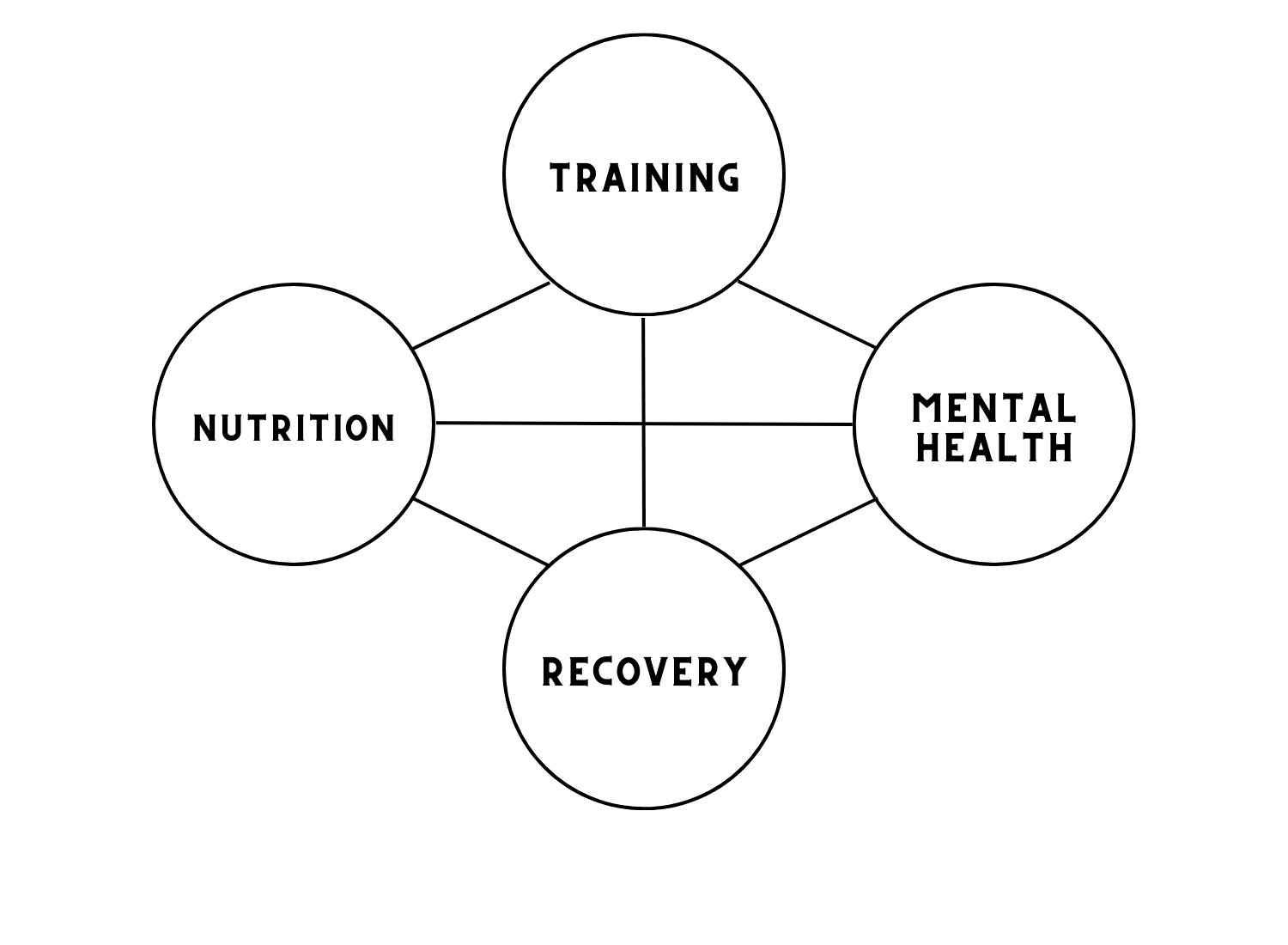
But training isn’t a thing, it’s a system. Which means that it’s interconnected and interdependent with other things. Recovery affects training. Nutrition affects training. Mental health affects training. These are what I’d call The Big Four: Physical Training, Nutrition, Recovery, and Mental Health.
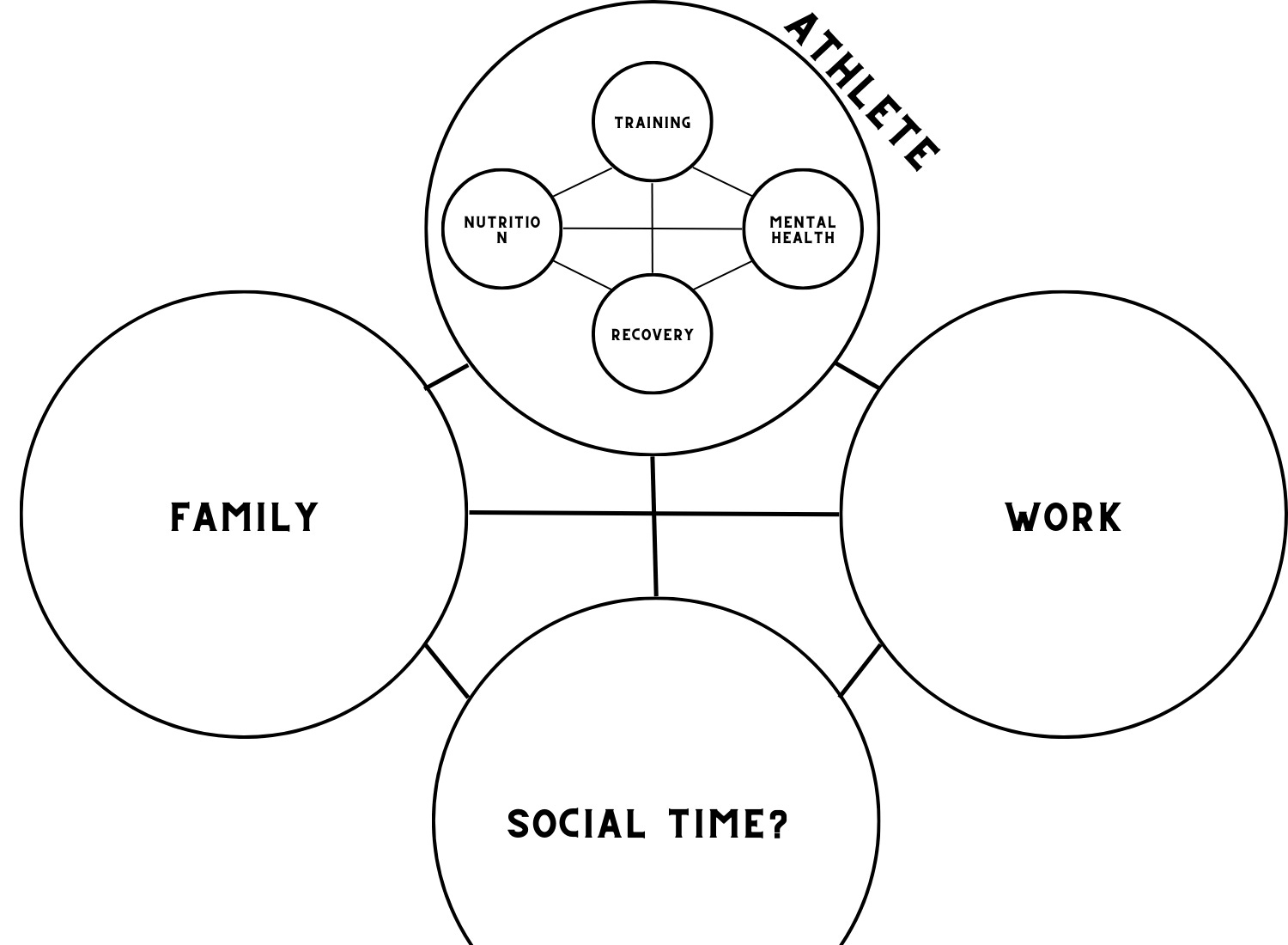
And fuck, while we’re at it, the part of you that is an athlete is still just a part of the system that is you the person! The Athlete in you is interconnected and interdependent with you the Professional, and you the Mother, or Father, or Sister, or Friend.
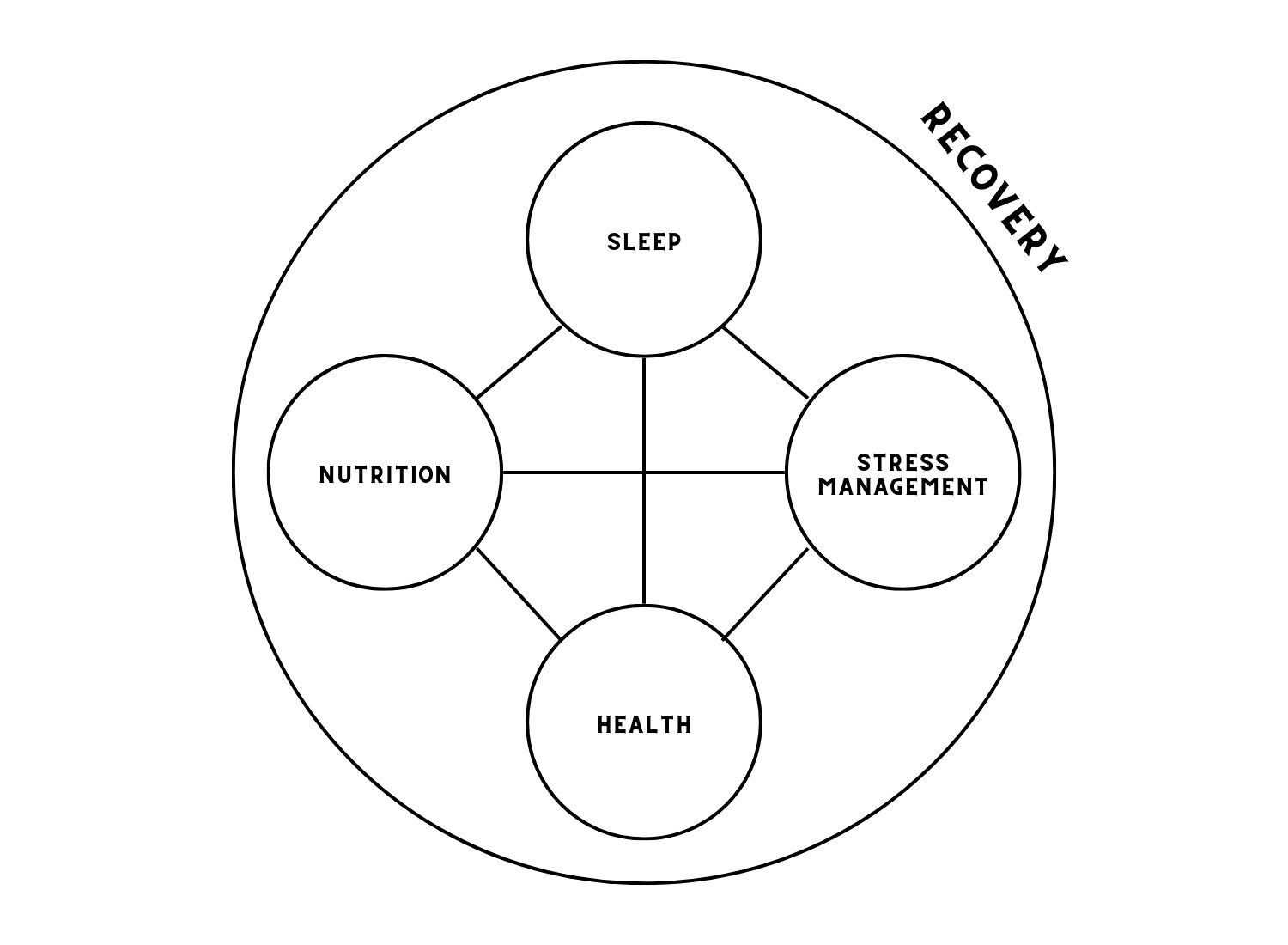
This complexity runs the other way as well. Recovery is a part of the Athlete which is a part of the Person, and Recovery is interconnected and interdependent with Sleep, Stress Management, Nutrition, and Health!
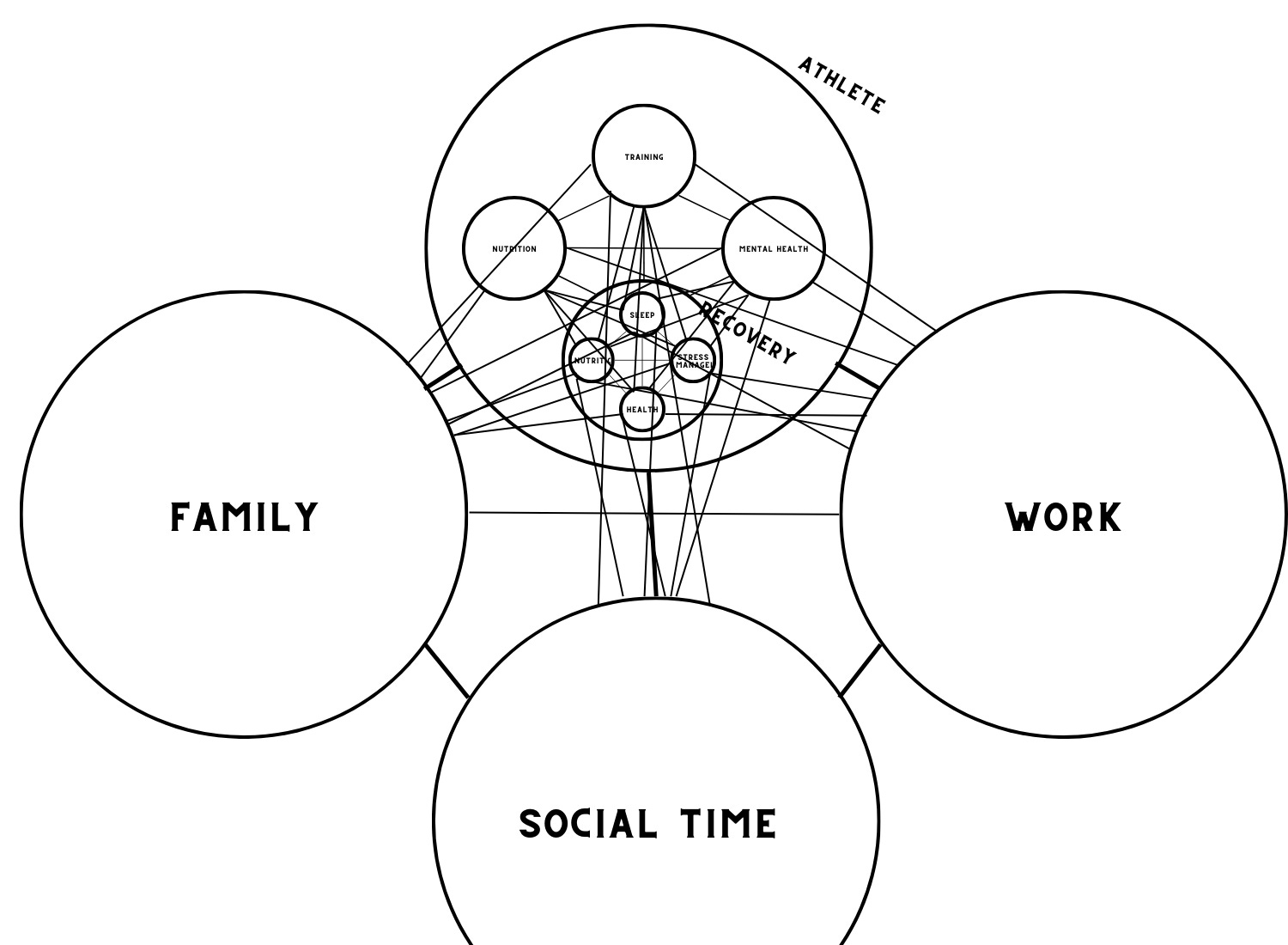
If you zoom back out to the person level, and then show all the connections, you start to see the complexity: if you change any one of these parts, you’re also going to be changing all the other parts! After a while this kinda makes intuitive sense. Your social time impacts your sleep. Your nutrition impacts your work. Your sleep impacts your family.
Yeah yeah coach, I know that shit, why are you still talking?
I’m saying this to highlight two points.
First, if you go to a coach (or, almost as often these days, an AI), and they aren’t taking into account the other systems, then it’s going to be a challenge to see results. If you treat training like it’s isolated from the rest of your systems, you’re going to be really limited in your progress. In related news, if you come to me and tell me all you want is training, with no consideration of nutrition, recovery, lifestyle, etc., it’s going to be a challenge to see results!
Second, and this is a big one: the interconnectedness of this has a pretty profound impact on approach.
The thing about a system is that the health/productivity/speed of a system isn’t defined by averages, it’s defined by choke points. Take the human body. If you’re world class fit, and you get the flu, can you perform? Fuck no. Even though on average you have all the strength and all the fitness and all the skills, and all the mental toughness, your fitness is going to be limited by that sickness. Similarly, if you limit one of the factors of the oxygen cascade (which we can see in any number of ways like dehydration, or anemia), then guess what, the whole system sucks!
This same concept is true of the whole system of you as an athlete. Let’s say you could grade yourself on The Big Four (Training, Recovery, Nutrition, and Mental Health) on a scale of 10. What’s going to really fuck up your progress isn’t that, say, all of the factors are 8/10, what’s going to really mess it up is one of the factors being 4/10.
The most important part for all us exercise extremists is that as finite humans, we have limited resources, and so getting all our factors up to 10/10 just isn’t going to happen. We don’t have 40 points to spread between The Big Four, we probably have 32. We can’t maximize our effort in one area without sacrificing it in another area. This means that 8/10 isn’t just not-bad, it’s actually the goal! If our progress is defined not by the average, but by the lowest factor, then actually, even accidentally allowing yourself to go to 10/10 on any factor is going to slow down your training! If your system is running at 8/10, but you accidentally spend all your resources one week on Nutrition and end up going 10/10, then for a while after your overall progress is likely a 6/10, because those two points had to come from somewhere (Mental Health?)!
This is one of the reasons that very few elite athletes follow super strict diets. They have figured out over time that because we’re all humans with limited give-a-fuck, and because Training, Nutrition, Recovery, and Mental Health are all interconnected and interdependent, that trying to eat perfectly wears away at the one of the other factors.
Thus not only is it “okay” to only take individual factors to 8/10, it’s actually the goal to stop them there, as even accidentally going to 10/10 will slow down the larger system!
Let’s see how this plays out. Making training changes takes resources. Time, money, energy (both physical and emotional). If you accidentally use them all to make sure your dinner is perfect, how much give-a-fuck do you have left to do a pretty good job on your sleep routine? How many times have you come into an evening and fucked up your sleep because you just didn’t have it in you turn off your screens?
If you go to the well in a workout, how good are your recovery practices after?
Unfortunately our popular culture and media conspire against us to tell us that what we really need is hero workouts, and extreme diets, and magic bullet workouts, all of which celebrate going 11/10 on one epic part of the system. But that shit just doesn’t work.
In order to make good progress in your training, you need to treat it like a system, and not a set of disparate unconnected parts. If you don’t acknowledge the parts, then it’s really easy to spend a long time training at 4/10.
Great article Joe 👍
I might have to weave this into our Food Is Health Revolution substack 😂